What Happened to Liberal Democracy?
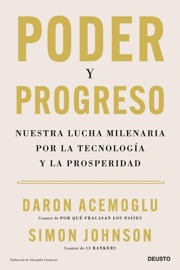
From Daron Acemoglu, 2024 Nobel laureate in economics and coauthor of Why Nations Fail, an ambitious and expansive inquiry into the biggest story in global politics over the last hundred years: the rise and fall of liberal democracy
With the fall of the Berlin Wall in 1989, it seemed like we were one step closer to the triumph of liberalism—with more and more of the world population living in liberal democracies and benefiting from sustained growth and shared prosperity. A generation later, one can only ask: What happened?
Liberal democracy flourished, Nobel laureate Daron Acemoglu argues in this powerful and persuasive book, when it pursued its core promises of shared prosperity, democratic governance at the local and national level, and the free pursuit of knowledge. But liberalism, a philosophy built to challenge power, neither fully adjusted to becoming the establishment. Nor was it able to deal with the economic and social disruptions that digital technologies wrought. Worse, liberalism lost its way in the postindustrial economy and turned its back on its core promises. Acemoglu, using the wide interdisciplinary lens that has won him acclaim, documents the extraordinary, unparalleled progress that liberalism created, and how this philosophy and liberal democratic institutions plunged themselves into a crisis over the last four decades.
Looking at rapid advances in technology, shifts in regulatory environments, global political history, and economics, Acemoglu lucidly lays out the successes and failures of our most important political system. He explains how the postindustrial society where the college educated have come to be politically dominant and separated from the rest sowed the seeds of widespread inequality and intensifying social engineering.
But this book is also an invitation to remake liberalism as a new and more effective political philosophy—in the form of working class liberalism prioritizing shared prosperity, valuing community, and differences in values and views.
More Books from Daron Acemoglu