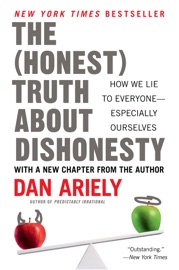
The Honest Truth About Dishonesty
The New York Times bestselling author of Predictably Irrational and The Upside of Irrationality returns with thought-provoking work to challenge our preconceptions about dishonesty and urge us to take an honest look at ourselves.
• Does the chance of getting caught affect how likely we are to cheat?
• How do companies pave the way for dishonesty?
• Does collaboration make us more honest or less so?
• Does religion improve our honesty?
Most of us think of ourselves as honest, but, in fact, we all cheat. From Washington to Wall Street, the classroom to the workplace, unethical behavior is everywhere. None of us is immune, whether it's the white lie to head off trouble or padding our expense reports. In The (Honest) Truth About Dishonesty, award-winning, bestselling author Dan Ariely turns his unique insight and innovative research to the question of dishonesty.
Generally, we assume that cheating, like most other decisions, is based on a rational cost-benefit analysis. But Ariely argues, and then demonstrates, that it's actually the irrational forces that we don't take into account that often determine whether we behave ethically or not. For every Enron or political bribe, there are countless puffed rÉsumÉs, hidden commissions, and knockoff purses. In The (Honest) Truth About Dishonesty, Ariely shows why some things are easier to lie about; how getting caught matters less than we think; and how business practices pave the way for unethical behavior, both intentionally and unintentionally. Ariely explores how unethical behavior works in the personal, professional, and political worlds, and how it affects all of us, even as we think of ourselves as having high moral standards.
But all is not lost. Ariely also identifies what keeps us honest, pointing the way for achieving higher ethics in our everyday lives. With compelling personal and academic findings, The (Honest) Truth About Dishonesty will change the way we see ourselves, our actions, and others.
More Books from Dan Ariely